 A Bluegrass Wake, at Image Journal.
Tuesday, October 18, 2011


Wednesday, October 05, 2011
Joe Henry - Reverie
 Joe Henry has a new album called Reverie. It's the best album I've heard this year. This is the way it often works for me, it seems. Joe Henry releases an album. It's the best album I hear that year.
I once read a review that claimed that Henry's music is an acquired taste. And it is. He himself would admit that he isn't much of a singer, and the off-kilter, woozy amalgam of Depression-era jazz, blues, and folk that accompanies his words can sound dense and foreign to modern ears attuned to accentuated dance beats or power chords. It comes across the speakers or the earbuds the way a not-quite-tuned-in radio station comes in; readily discernible, but fuzzy. That impression is only accentuated with Reverie, which leaves the windows of the recording studio wide open to pick up the sounds of passing traffic, barking dogs, and visiting mailmen. Personally, I love the sounds. But I love Depression-era jazz, blues, and folk, too. I'm weird.
If you don't particularly care for the sounds, and if you're willing to hang in there and give it a go anyway, I can't help but think you'll be amply rewarded if you pay attention to the lyrics. Songwriters are frequently called poets, but really most of them are hacks who have figured out how to rhyme. Joe Henry is a poet. By that I mean his lyrics can stand alone as legitimately layered, nuanced poetry. Dylan has done this at times, and perhaps Paul Simon, Tom Waits, Joni Mitchell, and Leonard Cohen in good years, but Henry has made a 20+ year career out of this, and he keeps getting better. From a songwriting standpoint, I'd stack the albums Joe Henry has made in the past ten years -- Scar, Tiny Voices, Civilians, Blood From Stars, and Reverie -- against any ten-year-run by any songwriter anywhere, anytime. Look at what he does for Richard Pryor, perfectly encapsulating a deeply conflicted life, and doing it within the context of a 12-bar blues:
Sometimes I think I’ve almost fooled myself
Sometimes I think I’ve almost fooled myself--
Spreading out my wings
Above us like a tree,
Laughing now, out loud
Almost like I was free
I look at you as the thing I wanted most
You look at me and it’s like you’ve seen a ghost;
I wear the face
Of all this has cost:
Everything you tried to keep away from me,
Everything I took from you and lost
Lights shine above me, they’re like your eyes above the street
Lights shine below me, they’re like stars beneath my feet;
I stood on your shoulders
And I walked on my hands,
You watched me while I tried to fall
You can’t bear to watch me land
Take me away, carry me like a dove
Take me away, carry me like a dove;
Love me like you’re lying
Let me feel you near,
Remember me for trying
And excuse me while I disappear
He captures those fumbling, inarticulate moments when we know that something is stirring within but we can't name it, can't pin it down, but we know that we are fully alive, in touch with the person we are and the person we can become. He does it on Reverie with songs like "Heaven's Escape" and "Grand Street." A kid lies on top of a car hood, watching a Henry Fonda movie projected against the side of a bank. A kid -- the same kid? -- encounters a seedy hotel cook holding a door open to the back of the hotel. What happens in those two scenarios is blurry, indistinct, never explained. But these are the moments on which life hinges. Get off the car hood, or walk in the hotel door, and life proceeds one way. Stay on the car hood, walk past the hotel cook, and life proceeds another. Flannery O'Connor presents these tiny, telling moments again and again in her short stories. Sherwood Anderson does it in a marvelous short story called "Sophistication." It's the same moment Bruce Springsteen describes in "Thunder Road." Mary either gets in the car and heads off down the highway or she doesn't. And everything depends on the choice.
That's what Joe Henry does, again and again. He illuminates the ineffable. He probes the inarticulate, murky world where the light occasionally shines. He's a great songwriter.
Monday, October 03, 2011
Dwight Twilley

The saga of Dwight Twilley is the classic story of the right guy in the wrong place at the wrong time. It would have never been easy for a man from Tulsa, Oklahoma to bust into the rock 'n roll mainstream, but Twilley also happened to arrive on the scene in the mid-'70s, a time when Anglophile power pop was in disfavor. Just ask Alex Chilton and Big Star. Twilley and songwriting partner Phil Seymour delivered two superb albums -- 1976's Sincerely and 1977's Twilley Don't Mind -- experienced barely a ripple of critical acclaim, and disappeared from view.
He's resurfaced with new solo albums periodically, and the past five years or so have seen a resurgence of interest in his music. Nada Surf covered Twilley's "You Were So Warm" (from Sincerely) on last year's very fine If I Had a Hi-Fi (a case of the criminally unappreciated covering the criminally unappreciated?), and he's now the subject of a rock 'n roll documentary. The resulting soundtrack for the film (called, appropriately enough, Soundtrack) has just been released, and it's a wonderful reminder of all that is special about his music. The songs, all written and performed by Twilley, are rueful, funny, and deeply personal, and if his voice is a little weathered and frayed around the edges, he's lost nothing in the way of memorable pop hooks. Take a listen, explore the back catalog, and revel in the wonders of one who slipped under the radar.
Tuesday, September 27, 2011

Monday, September 12, 2011
Sunday, September 11, 2011
9/11
 I will not be watching the tributes today. I don't need to see the re-runs. I can play the thing in my head pretty much anytime I care to.
It was and is awful, of course, the worst day America has ever seen. It was shocking, terrible, deeply tragic. I walked into the Bureau of Motor Vehicles to renew my driver's license, saw people weeping, and had no idea. The bureaucracy was bad, but not that bad. And then I saw the second tower fall, and I knew that the world had changed.
And the world has changed. We're less free than we used to be, and if you don't believe it, just visit your nearest airport. We are more divided, more belligerent, more prone to chanting and slogans than measured dialogue. Don't believe it? Just turn on the NFL game of your choice today, and listen to the "U.S.A." chants.
For what it's worth, I pray that God blesses the U.S.A. I pray that God blesses Iran and Iraq and Afghanistan. I pray that hatred will not have the final word -- in New York City, in Washington D.C., and in Baghdad and Kabul. I pray, and sometimes it seems an impossible prayer, that love will prevail.
I pray that people will listen to one another. I pray that the demonization will stop, that people will see individuals and not ideologies, that people will be evaluated according to the character of their lives rather than their wardrobes, their religions, or their political persuasions. Mostly I pray for mercy. It's what I need. It's what the U.S.A. needs. I pray that I will become a more gracious human being, more compassionate, less concerned with my rights and my beliefs and my agendas. And I pray that I will turn the channel when I see the sentimentalization and mythologizing of a day that should remain starkly real and starkly terrible. I pray that we learn from the past, not make a video montage of it, complete with soaring strings.
Monday, August 29, 2011
Joe Henry Bio
 Joe Henry asked me to write his biography for his label, Anti Records. I did, and was honored to do so.
Monday, August 22, 2011
Edification
 Every time I write a review for Christianity Today Magazine, I receive one or more strident comments from readers who wonder why CT is publishing such unedifying trash.
It's okay. It's kind of my specialty, I suppose. This is because I usually review "non-Christian" music -- genuine, non-religious, non-denominational, non-praise anthems (or not) from people of unknown or indifferent theological persuasions. Personally, I find a lot of this stuff edifying. Merriam-Webster tells me that means "to instruct and improve, especially in moral and religious knowledge," and that works for me, even with Jeff Bridges and The Hold Steady who, to my knowledge, wouldn't be caught dead in a catechism class. My latest review is an album by Jeff Bridges, a dude known for playing The Dude in the movies, and not previously known for any musical abilities. And sure enough, there were two comments left on the website that noted the lack of edification in the review. I presume that they were suitably warned off from the music by the lack of Christian content, although I did my best to note why I liked the album, and thought it worth hearing.
What is a little disheartening about this process is that those were the only two comments on the review. Based on an admittedly ridiculously limited sample, the Christian community is batting 1.000 against the Dude and non-edification. This is an album where Bridges sings a song called "Nothing Yet," which isn't about Jesus, and doesn't contain the words "loss," "cross," "grace" or "face," but which does contain a rather startling reflection on a life mostly spent, and regret, and sorrow, and a determined resolve to live the part that remains better than what has passed.
If only he had called it "Deathbed Repentance" it would have been so much more edifying. But he's a non-Christian, as far as I know, and probably a sinner of the first magnitude. We shouldn't be supporting this kind of stuff in a Christian publication.
Friday, August 19, 2011

Thursday, August 18, 2011
Scud Mountain Boys -- Massachusetts
 Such lovely misery. I've been revisiting early Joe Pernice, specifically his incarnation as the leader of the Scud Mountain Boys, and I've been reveling in the stark melancholia of Massachusetts:
They pulled her from a ditch last night
Somewhere down on 95
On the wrong side of the road
Found a needle and a pipe
Those are the opening lines of the opening song, and it more or less goes downhill from there. Too much of this and I can end up in a very bad place, but there's much to be said for stripping away all the busyness and pretense, and staring bleary-eyed at the abyss of 3:00 a.m. and too many memories, and Massachusetts is that kind of album. This one was released at the height of the Ryan Adams/early Wilco alt-country hype, and it disappeared with hardly a ripple. It's too bad, because it's a better album than Ryan Adams or Wilco have ever released; full of aching melodies, hard-won wisdom and regret, and gorgeous guitar/pedal steel interplay. Sometimes it boggles my mind that Joe Pernice is not a superstar.
Monday, August 15, 2011
Richard Buckner - Our Blood
 So, here's another great Richard Buckner album that nobody will hear. It's par for the course for this master of miserabilism, and probably provides grist for the creative mill. The fact is, I could listen to Buckner sing almost anything. His husky moan of a voice perfectly encapsulates the sound of a sleepless night, brooding over too many memories. But as his small but dedicated coterie of fans already knows, he's a very fine writer as well.
 The backstory on Our Blood is both fascinating and grisly. Richard's treasured tape machine bit the dust, his apartment was burgled, and, I kid you not, a headless corpse was found in one of his burned out trucks. The girl, for those who have followed the story, left several albums back, and I don't know if the dog died.
At any rate, "I guess I'm the one they warned you about," he sings on "Confession," and the lyrics take on a chilling weight given the pre-recording history. The basic ingredients here -- strummed acoustic guitars, lap steel, gently brushed drums, the occasional wash of strings -- belie the intensity of the songs. This is a man who has lived through hell, and who wants to tell you about it, albeit in startling metaphors and evocative poetry. Opener "Traitor" finds Buckner doing what he does best, wrapping that supremely ragged, soulful voice around a tale of relational disintegration, of the center not holding, yet again:
You woke up too late, but know what they thought
While you were waiting for the strangers that had gone
Somewhere to stay together apart,
Where everyone traded as they faded in the dark,
Caught in the lights they couldn't show through
And just beyond they'd always know you
Would give it away, even as dust
Falling just out of frame, leaving everything untouched
Buckner threw away a big-label contract to record a batch of songs based on Edgar Lee Masters' Spoon River Anthology, and his best-selling album (Devotion + Doubt) sold a whopping 27,000 units, and was recorded fifteen years ago. He's probably given up the big dream long ago, and he just keeps on recording one stellar album after another. He'll be coming to a dingy dive near you soon. If you get the chance, you should see him.
Friday, August 12, 2011
Lydia Loveless
 Lydia Loveless is a Columbus kid via Coshocton, Ohio who sounds uncannily like Neko Case. She fronts a band that sounds like Drive-By Truckers and early Old 97’s (which, as weird as it looks, is not an oxymoron). For some of us, that’s pretty close to country-punk heaven, so I hope you’ll forgive the hyperbole when I tell you that she ought to be a big star, and you can help to make her one when her debut album, Indestructible Machine, is released on Bloodshot Records next month.
Nothing against Neko, whose big, twangy voice is a constant delight, but Lydia has both the voice and the memorable songs, and her emotionally cathartic tales of regret, rage, dissolution, and good, old-fashioned lust play out like the impolite, mouthy cousin to Neko’s art school co-ed. She’s also really funny, and writes a song about Steve Earle ostensibly so she can ingratiate herself with his son Justin. You do what you have to do.
She’s got the hard-living, I-don’t-give-a-fuck persona going, which frankly is a bit tiresome, but maybe that comes with youth. Apparently she’ll be 21 pretty soon. For what it’s worth, Lydia, that Indestructible Machine thing? It’s a lie.
Friday, August 05, 2011
Initial Thoughts on the New Hood
1) It's really bright in the middle of the city, even at 2:00 a.m. I wish I had not personally verified this on a Thursday night. I'm tired today.
2) One of our new next-door-neighbors, an old guy, said to me, "It's nice to have some older neighbors." Asshole.
3) It is evident, even on Day 2, that the books 'n music purge was not nearly deep enough. I have no idea where we're going to store the pared-down remnants.
4) There are black people and ethnic minorities in our lives now. Wow. Actually, I'm very glad about this.
5) Lawncare is a noticeably lesser concern. Some lawns probably haven't been mown in two weeks, and I haven't seen a single lawn that sports the cross-hatched/spreadsheet look that comes from mowing, and then immediately mowing again at a 90-degree angle.
6) People have front porches, not back porches. And they appear to use them. I've actually seen numerous neighbors, and talked to three of them.
7) I hate salmon-colored carpet, which we have in our upstairs spare bedroom. I hate salmon, for that matter. Nothing good comes from salmon.
8) Except for the upstairs spare bedroom, the rest of the house has beautiful hardwood floors. I like that a lot.
9) Certain boxes need to be found and unpacked ASAP. The one with my Kindle. The one containing the other three volumes of George R.R. Martin's A Song of Ice and Fire. The one containing the new Lydia Loveless album.
10) We are within easy walking distance of restaurants, bars, parks, concert venues, church, and dozens of friends, as well as Methadone clinics, homeless shelters, halfway houses, Wiccans R Us shoppes, food pantries, and at least three tattoo parlors. And a university with 55,000 students, and all the attendant hoopla and craziness that entails. It feels like it might be home. I'm glad to be here.
2) One of our new next-door-neighbors, an old guy, said to me, "It's nice to have some older neighbors." Asshole.
3) It is evident, even on Day 2, that the books 'n music purge was not nearly deep enough. I have no idea where we're going to store the pared-down remnants.
4) There are black people and ethnic minorities in our lives now. Wow. Actually, I'm very glad about this.
5) Lawncare is a noticeably lesser concern. Some lawns probably haven't been mown in two weeks, and I haven't seen a single lawn that sports the cross-hatched/spreadsheet look that comes from mowing, and then immediately mowing again at a 90-degree angle.
6) People have front porches, not back porches. And they appear to use them. I've actually seen numerous neighbors, and talked to three of them.
7) I hate salmon-colored carpet, which we have in our upstairs spare bedroom. I hate salmon, for that matter. Nothing good comes from salmon.
8) Except for the upstairs spare bedroom, the rest of the house has beautiful hardwood floors. I like that a lot.
9) Certain boxes need to be found and unpacked ASAP. The one with my Kindle. The one containing the other three volumes of George R.R. Martin's A Song of Ice and Fire. The one containing the new Lydia Loveless album.
10) We are within easy walking distance of restaurants, bars, parks, concert venues, church, and dozens of friends, as well as Methadone clinics, homeless shelters, halfway houses, Wiccans R Us shoppes, food pantries, and at least three tattoo parlors. And a university with 55,000 students, and all the attendant hoopla and craziness that entails. It feels like it might be home. I'm glad to be here.
Tuesday, August 02, 2011

Saturday, July 23, 2011
The 27 Club
 Screw "the 27 Club." It's yet another shallow media angle on tragedy, which is always of a supremely individual nature in these circumstances. Amy Winehouse's body isn't even cold and talking heads are already concocting their idiotic theories about the magic, tragic number.
Here's what it is: the human body can only take so much abuse. You spend a decade or so swallowing, smoking, snorting, shooting or otherwise ingesting opioids, stimulants, and hallucinogens, and long about day 3,500 - 4,000 the heart stops working. There's your magic numbers for you. You can take that to the bank, or the mortuary, as the case may be.
Here is a young, talented woman, now dead because she could not stop destroying herself. No doubt we'll have the media circling the body like vultures, ready to canonize her as an official member of the Tragically Dead Rock Pantheon, the Fucking 27 Club, and this ridiculous, supremely destructive myth will be perpetuated. Been there, done that, got the NA keychains to prove it. Mourn the young woman who could not escape the grip of addiction. That's always tragic. But I don't want to hear about the 27 Club.
Friday, July 15, 2011
Brad Mehldau
 Solo jazz pianists are an endangered species, and for good reason; most of them should be shot. Keith Jarrett, as great as he is, should never be forgiven for the noodling hours and orgasmic groans he has committed to his solo recordings. Even at its best -- Monk's sides for Blue Note, say, or Bill Evans' exquisite "Peace Piece" -- solo jazz piano is best experienced and appreciated in short bursts. Push it much beyond five minutes and the eyes start to glaze over.
So, how to explain Brad Mehldau? Mehldau essentially operates in three modes -- as the maestro of the standard piano trio, as the daring obliterator of genre boundaries (see his work with Anne Sofie von Otter or Joe Henry, or his stirring takes on Nirvana and Radiohead), and, yes, as a solo pianist. The weird thing is he's good, very good, and fascinatingly listenable, even when he's playing all by his lonesome for hours at a time.
Consider his 1999 album Elegiac Cycle, an hour-long solo piano test of endurance that turns out to be nothing of the kind. Instead, the ravishingly lovely songs spin out in endless variations, the perfect distillation of classical impressionism and jazz improvisation. There's a bit of Debussy there, a bit of Monk in the stabbbing left hand, a whole lot of Bach counterpoint and Bill Evans meditative rumination, all rolled into a seamless whole that remains startling more than a decade after its release. I still listen to this album every couple months or so, and I hear new delights every time. Or consider his latest album Live in Marciac, a 2-disc solo set that surely seems like it could be marketed as a possible insomnia remedy, but which instead offers one astonishing delight after another. It's difficult to sleep when your jaw is on the floor.
Mehldau has prodigious technique, to be sure, but what impresses me even more is his ability to wed those classical chops with the jazz and blues chord structures that invariably communicate deep soulfulness and melanchology. He's the most gifted synthesist currently working in jazz. I'm astounded that I'm about to write this sentence, but I'd be hard-pressed to recommend a better starting point than his latest 2-hour solo piano set. You get the Bach counterpoint, the Great American Songbook, and Nirvana, Nick Drake, and Beatles covers, plus a DVD that does little more than show Brad Mehldau's hands at work. He's a good worker. You should check him out.
Tuesday, July 12, 2011

Friday, July 08, 2011
Jeff Bridges -- The Dude Records
 It's an old and usually horrendous game: a successful actor or actress takes a musical turn, believing that talent in one medium will automatically translate to talent in another. William Shatner and Scarlett Johansson, anyone?
So the Dude has made an album. A self-titled one on Blue Note Records, due out in the middle of August. Go figure. He's surrounded himself with top-notch talent -- T Bone Burnett in the producer's chair, the Joe Henry house band, Sam Phillips and Roseanne Cash on backing vocals. Predictably, the sonic pieces sound great. Less predictably, so does Jeff Bridges. Those of you who saw him in Crazy Heart probably aren't completely surprised by this. Bridges can do the grizzled, world-weary Country Dude about as well as anybody, even approaching hallowed Johnny Cash territory. What is more surprising to me is how well he does buoyant, swaggering country rock. Opener "What a Little Bit of Love Can Do" sounds like a bona fide hit, its jangly Buddy Holly riff scuffed up by Bridges' raspy vocals. But Bridges has that grey hair for a reason, and on the late Stephen Bruton's "Nothing Yet" he pulls off a harrowing tour-de-force, a deeply rueful stocktaking that barely rises above a whisper. It's a marvellous lesson in both soul and restraint, the verses made all the more powerful because you have to strain to hear them. It sounds like a deathbed confession.
In the end, it's a moot question as to whether Bridges has the musical goods. He sings well enough to be totally believable. It's a talent he's transferred over from his movie roles, and the Dude abides just fine in the recording studio. I'll have a more detailed review out in Christianity Today, but this one is a delightful, moving surprise.
Thursday, July 07, 2011
Fucked Up - David Comes to Life
 First, I didn't name the band. Don't blame me.
Second, they're pretty good anyway. Given the name, what's surprising is not the feral howl of behemoth frontman Pink Eyes, but rather the prog rock shredder underpinnings of these 18 very long songs. This is melodic hardcore with hooks, and with at least a rudimentary knowledge of metaphor, character development, and lyrical nuance. Imagine.
I pretty much missed Fugazi and Black Flag, although those are some obvious touchstones. But so are Rush and Van Halen. Pink Eyes basically alternates between bellowing and screaming, with occasional bouts of ranting thrown in for good measure, but the female backing vocalists add some needed humanity. The press release assures me that this is a concept album about something or other (Love? Murder? Vengeance? George Bush? Astral projection? I think they're all in there somewhere), but I wouldn't worry too much about it. Much like last year's album The Monitor from Titus Andronicus, this is a whole lot of blustering noise and literary pretense, probably all deeply indebted to weed. What matters are the guitar riffs, and they are unsurprisingly fierce and surprisingly nuanced and dynamic. This is a punk band that can really play, and they've certainly released my favorite Rawk album so far this year.
Saturday, July 02, 2011
The Second Tier?
 More and more I'm convinced that the mid-'50s through the mid-'60s were the true Golden Age of Jazz. Not only were the acknowledged giants roaming the earth and laying down their masterpieces -- Miles, Trane, Mingus, Monk, Bill Evans, Sonny Rollins -- but there were a whole host of "second-tier" musicians who released one stellar album after another. God only knows why these folks aren't better known, but they're not. I'd argue that there's at least a couple albums from each of these relative unknowns that can hold their own with the greatest jazz ever released.
And so this morning I've been sampling the wares of a few longtime favorites who frequently get pushed aside (at least by me) in favor of their better-known contemporaries. Specifically, I've been listening to:
Sonny Stitt -- Stitt Plays Bird
Booker Ervin -- Cookin'
Dexter Gordon -- Go
Eric Dolphy -- Out to Lunch
Hank Mobley -- Soul Station
Horace Silver -- Blowin' the Blues Away
Jackie McLean -- Right Now
Jimmy Smith -- The Sermon
Lee Morgan -- The Sidewinder
Rahsaan Roland Kirk -- Domino
Stan Getz and Joao Gilbert -- Getz/Gilberto
Sun Ra -- Sun Ra Visits Planet Earth
Every one's a masterpiece, I'm telling you. There's hundreds more where those came from.
Thursday, June 30, 2011
The Happy Thoughts - The Happy Thoughts
 You can generally figure that a band called The Happy Thoughts is either being ironic or terminally retro. In this case, retro wins. But I'm very impressed with these straightforward Buddy Holly/Bobby Fuller homages. There's no irony here, but there's plenty of jangly '65 rock 'n roll. There's a song about Indiana girls called, wait for it, "Indiana Girls," in which lead singer/songwriter Eric LaGrange opines:
I've been west and I've been east
And there's lots of real nice girls to see
They've got curves and they've got curls
But it's a lot more fun with Indiana girls
They just don't write 'em like that anymore. And yeah, it's a note-for-note knockoff of Fuller's "I Fought the Law (and the Law Won)," but if it was good enough for The Clash, it's good enough for me, too. There are about a dozen more inconsequential, delightful songs just like it, each of them running about 2:30. It's a ridiculously great summer pop album.
Friday, June 24, 2011
Gillian Welch
 This Depression-era waif is Gillian Welch -- in reality a modern-day SoCal child of privilege who dresses up in vintage dresses and pulls her hair back severely and tries to look and sound like Mother Maybelle Carter. It's okay. She writes songs that would sound marvelous in 1930 or 2030, and she and musical sidekick/life partner David Rawlings harmonize better than any of the country hippies since Gram Parsons and Emmylou Harris.
She has a new album out on Tuesday, The Harrow and the Harvest, her first in eight years. I'm pretty excited about it, not only because it's been a long time in coming, but because it is, by all accounts, a return to the Appalachian roots of her early albums, which featured poetic songwriting, an acoustic guitar, a dobro, and an occasional clawhammer banjo, and two voices soaring together.
She's a great songwriter, a master of stark minimalism who says more with less than any of her peers. Here's one of my favorite hymns, where she distills the essence of sin and redemption down to about 50 words.
Nobody knows what waits ahead
Beyond the earth and sky
Li-da-li-da-li, I'm not afraid to die
And all the work of my own hands
Be broken by and by
Li-da-li-da-li, I'm not afraid to die
Sometimes it finds me fast asleep
And wakes me where I lie
Li-da-li-da-li, I'm not afraid to die
Forget my sins upon the wind
My hobo soul will rise
Li-da-li-da-li, I'm not afraid to die
I need to hear the new album, but I'm predisposed to think highly of it. You should check her out if you haven't done so.
Monday, June 20, 2011
Remembering the Big Man
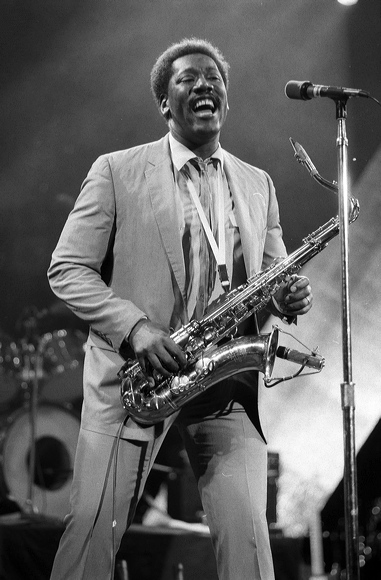 The media and the people who care about demographics would tell you that I belong to the tail end of the Baby Boomer generation, the folks who brought you Woodstock and Vietnam War protests, free love and costly debt accumulation. I would tell you that I belong to Bruce Springsteen and the E Street Band. It’s woefully inadequate as a tagline for an identity. But as a handy encapsulation of the forces that shaped my life, it will do. By the time I became old enough to care about cultural tags, the hippies had faded, the Vietnam War was winding down, Nixon had resigned, and Ford and Carter were presiding over a nationwide malaise. I was part of the generation that didn’t have a name. We weren’t Baby Boomers. We weren’t anything, really. We were just young, idealistic kids. In my case, I was trying to follow Jesus and trying to figure out how He would help me find a job once I graduated.
Bruce Springsteen played a concert in Athens, Ohio at that time, at a little auditorium on the campus of Ohio University. I was maybe 50 feet from the stage. And Bruce Springsteen did what he always did. He played for three and a half hours, and nobody, and I mean nobody, was complaining about the length of the show. I emerged a full-fledged, sweat-soaked, exhausted believer. Bruce got it. He understood in ways that the hippies totally missed. He understood the passions and the frustrations of my nameless generation, and he captured it all in mythic metaphors and poetry that could sing and sting. He also happened to play epic, glorious rock ‘n roll. “Every generation throws a hero up the pop charts,” Paul Simon would sing a decade later. Bruce Springsteen was mine. I just happened to share him with a few million other people.
The big black man who played saxophone at that concert died this weekend. His name was Clarence Clemons, although to millions of Springsteen fans he was simply The Big Man. Clarence Clemons wasn’t a great sax player. There are dozens of jazzmen who could school him. And he only really played two great solos in his life. The rest of the time he was content to churn out standard R&B riffs. Don’t let that fool you. He was the heart and soul of the E Street Band, and the E Street Band was the rock ‘n roll band of that nameless generation. Nobody else even came close.
Those two solos are both on the album Born to Run, the album that defined Bruce Springsteen. The first one is on the title track, a mad, soaring slab of soulful exuberance that perfectly matched the grit and passion of the lyrics. “We gotta get out while we’re young,” Bruce Springsteen sang, and that’s what Clarence Clemons played. It was a sax solo for the open road, for busting out and breaking shackles. The second and greater solo occurs at the end of the album, on a song called “Jungleland.” The open road has somehow inexplicably wandered into a thicket of blind alleys. The narrator who set out so confidently on the journey is back on the dead-end streets. Midway through the song Clarence Clemons plays a two-minute solo that captures the sound of America circa 1975, of the nameless generation of kids who thought they might have a defining moment, but didn’t, who busted out only to find a roadblock, a wall, an asphalt jungle without signs or markers. It is a solo that starts with a sustained wail and ends with a whimper. It may be the greatest rock ‘n roll elegy ever captured on recorded media.
That’s the guy who died this weekend. Maybe you had to be there, in Athens, Ohio, on that April night in the mid-1970s. Maybe you simply need to listen to the music. But that’s what we lost. And so it was a strange, rollercoaster day yesterday – Father’s Day, a day where I had wonderful conversations with my wife, and my kids, and numerous friends, and where I found myself emotionally raw, the tears welling up at the strangest times and the most inconvenient moments. The day was great. And so is the loss.
Friday, June 17, 2011

Wednesday, May 25, 2011

Tuesday, May 24, 2011
Dylan at 75
 New York, NY -- Feb. 17, 2016
Bob Dylan's 115th studio album It Doesn't Feeeeel At All Anymore will be released to coincide with the venerable musician's 75th birthday, on May 24th, 2016. Mr. Dylan, now confined to his nursing home bed except for seventy to eighty smoke breaks during the day, recorded the album over the course of several months last summer and fall. The unique circumstances of the recording sessions (e.g., the need to stop for oxygen intake roughly every thirty seconds) contributed to what longtime Dylan apologist Clinton Heylin refers to as the "breathless" quality of the music. "He can barely mumble anymore," Heylin says, "and when he's got a bit of oxygen in him, he tries to squeeze in as many words as he can. It's almost impossible to understand him, very much like the amphetamine-fueled days of the '66 tour." The twelve tracks, split between eight covers and four original compositions, reflect Dylan's ongoing obsessions with mortality, spirituality, and young women.
Track List
1. Hand Me Down My Walking Cane
2. Don't Get Around Much Anymore
3. Positively Mayo Clinic*
4. It Was a Very Good Year
5. Bad Girls
6. Bingo With a Bimbo*
7. My Generation
8. The Way We Were
9. Silver Threads Among the Gold
10. Idiot Anesthesiologist*
11. Hey Nineteen
12. Last Night I Dreamed of an Erection*
* = New Dylan composition
Dylan at 70
 So it’s been five years since I did this. And now Bob Dylan is 70, an unseemly age at which rock ‘n rollers need to seriously consider a future involving adult diapers and pureed food. “How terribly strange to be 70,” Paul Simon once sang, and he was right. He’s only got a couple months to go now, too. You keep waking up in the morning, and before you know it, it happens.
In the intervening five years Bob Dylan has, with characteristic implausibility, released a lot of music. Some of it is old (the historic Newport Folk Festival recordings from ’63 to ’65, the superb collection of outtakes and alternate song versions called Tell Tale Signs, the oft-bootlegged Witmark Demos, and a ’63 concert recording from Brandeis University). Some of it is new (the ridiculously great Modern Times, the mediocre Together Through Life, and the merely ridiculous Christmas in the Heart).
He’s kind of set in his ways now, so you get the feeling that the utter unpredictability of the man and his work is probably not going to change. He is, without a doubt, the greatest songwriter and the single greatest presence in the history of what could loosely be construed as rock ‘n roll. But the fact is that rock ‘n roll has never been big enough to encompass what this man does, which ranges from Delta blues to hallucinatory poetry to honky-tonk jukebox anthems to gentle folk to schmaltzy MOR, complete with sappy strings and heavenly host choir accompaniment. And that’s just in the last five years.
At some point he will probably stop making music. But he’ll go out with his boots on and his harmonica rack strapped to his guitar, and the Neverending Tour will have to be cancelled due to unforeseen circumstances. I hope that’s a long, long way off. Happy birthday, Bob. His biography at All Music Guide starts off with “Bob Dylan’s influence on popular music is incalculable.” That’s correct, and I won’t even begin to try to tote it up. But I’ll still marvel at what the man has done, and is doing. He won’t care about that, or about anything else written or said about him. He will go on being Bob Dylan. I suspect that’s part of the reason why we love him.
Monday, May 23, 2011

Friday, May 20, 2011
Every Picture Tells a Story
 Forty years ago this week Every Picture Tells a Story arrived on American shores. It was Rod Stewart’s third solo album, but nobody was really counting at the time. That’s because Rod Stewart was everywhere in 1971, and his albums with his superb band Faces were rivaling those of The Rolling Stones as the best that rock ‘n roll could offer.
For anyone who knows Rod Stewart only from his cheesy pop ballads (“Tonight’s the Night,” “Do Ya Think I’m Sexy?”) and his incessantly bland covers of the songs of Cole Porter, Irving Berlin, and George Gershwin, it may come as something of a shock to know that at one point he was the greatest rock ‘n roll singer in the world. But he was. He proved it on this album, where he took a bunch of old and decidedly placid folk, country, and R&B songs, and simply rocked the shit out of them. The fact that he did this with fiddles, pedal steel, acoustic guitars, and mandolins as lead instruments (and, okay, the world’s most primitive drummer in Micky Waller) is all the more remarkable.
There are a few exemplary Stewart originals here – “Mandolin Wind,” the title track, and, of course, “Maggie May.” But it’s the covers that still astound me. Whether obscure (Ted Anderson, anyone?) or blazingly obvious (Bob Dylan, Elvis, The Temptations), Rod’s covers on this album remain the definitive versions of these songs. There are eight songs here, spread out over about forty-five minutes. Okay, so Rod had yet to figure out how to write a catchy three-minute single (and I, for one, am never going to forgive him “Do Ya Think I’m Sexy?,” in spite of its admirable brevity). So he left a lot of room for the band to jam. Good thing, too, or we would have never heard Ronnie Wood’s finest six minutes as a guitarist on the title track, or Lindisfarne’s Ray Jackson play those poignant mandolin codas on “Maggie May” or “Mandolin Wind.” What we have here is as close to a perfect album as the seventies produced. If you’ve never heard it, do yourself a favor and discover one of the classics.
Wednesday, May 11, 2011
Nelsonville Music Fest, 2011
 Nelsonville, Ohio doesn't have much going for it. There used to be a shoe factory in town, but it closed up shop a long time ago. Now 10,000 people hang out and don't do much of anything. There isn't much w0rk outside of the fast-food restaurants and gas stations. The more enterprising citizens run meth labs out on the Back 40, and there's plenty of open spaces right outside of town to raise illegal cash crops to sell to the college kids in Athens, 15 miles down the road. And that's about it.
Or was about it, until about ten years ago. That's when a couple idealistic entrepreneurs bought an old, abandoned opera house in the center of town, refurbished it, and started bringing in national music acts. People trekked down from Columbus, 60 miles north. People trekked up from Athens, 15 miles south. It's not exactly a rags-to-riches story, but they made enough cash to do something truly audacious: start a major music festival out in the middle of nowhere, in the Appalachian foothills where nobody with any sense ever stops.
That was seven years ago. And it's taken off, sort of. By that I mean the musical acts have gotten bigger, the scope has gotten grander, and the three days in mid-May that it all goes down are the musical highlight of the year for quite a few people. But this isn't Bonnaroo or Coachella, where you can watch your favorite band from half a mile away. This is Nelsonville, Ohio, where 5,000 people show up, maybe 10,000 if the weather is nice, where you can cozy right up to the stage, and where you're liable to run into Willie Nelson or Loretta Lynn strolling the grounds. For some of us, it's just about the best music event in the world.
It's happening again, starting Friday afternoon and extending through Sunday evening. That's Sharon Jones and her Dap Kings up there to the left, who put on one hell of a show last year. Sharon won't be there this year, but here's who'll show up:
FLAMING LIPS
GEORGE JONES
NEKO CASE
Yo La Tengo
Wanda Jackson
Justin Townes Earle
Over The Rhine
Ghost of a Saber Tooth Tiger
Lost in the Trees
Bomba Estereo
Mucca Pazza
The Growlers
Michael Hurley
Drakkar Sauna
Doug Paisley
Ned Oldham & Old Calf
Baby Dee
Y La Bamba
Cheyenne Marie Mize
Southeast Engine
The Honeycutters
Chooglin'
Samantha Crain
The Spikedrivers
Sgt. Dunbar & The Hobo Banned
Nick Tolford and Co.
Mount Carmel
Wheels On Fire
Black Owls
She Bears
The Black Swans
Hex Net
Octopus & Owl
Duke Junior + The Smokey Boots
Scubadog
Whale Zombie
Weedghost
Rattletrap
Jerry DeCicca
Eve Searls
Shelby Carter
Jess & Kyle
Zeb Dewar
Bruce Dalzell
Todd Burge
Chris Biester
Matt Moore
The Lovesick Blues
Seth Riddlebarger
Bill Wagner & Brett Burleson
Shazzbots
Flyaway Saturn
Elemental Revolver
That deck is stacked, but clearly the aces are on top. Most people will come for The Flaming Lips, and that's fine. If it brings people to Nelsonville, Ohio, I'm for it. Personally, I'm most excited about George Jones (who will, I trust, show up) and Neko Case. I look forward to seeing rockabilly queen Wanda Jackson and indie stalwarts Yo La Tengo for the first time, and Justin Townes Earle and Over the Rhine for the umpteenth time. Some of those folks farther down the list make me pretty happy, too. Michael Hurley is a freak-folk original, a guy who's been writing wonderful and bizarre songs since the '60s. Drakkar Sauna recorded an album of Louvin Brothers covers a few years back that I thought was just swell. Doug Paisley is a Nashville renegage who writes literate, thoughtful, and wryly humorous country songs. I've already told my kids we need to get on the road early Saturday so we can catch Baby Dee. Baby Dee used to be a he, is now a she, and writes some of the most transparently beautiful piano ballads you will ever hear. My longtime buddies and Athens favorites Southeast Engine are playing Saturday afternoon, right on the heels of their new album that has received ecstatic reviews almost everywhere. I can't wait to see them. Jerry DeCicca and his fine Columbus country-noir band Black Swans are playing separately and together. Eve Searls, who I've only encountered in her fine band Super Desserts, is apparently playing a solo set. Oklahoma singer/songwriter Samantha Crain, whose 2009 album Songs in the Night knocked me flat, is playing a solo set. And my buddy Professor Josh Antonuccio, who doubles as an extraordinary music producer, is playing with his band Scubadog.
There is so much to see and hear. Couple that with anticipated reunions with lots of friends I haven't seen in a while, and a chance to spend three days with my daughters, both back home, albeit momentarily, from farflung universities, and you have the makings of one fine extended weekend. I suppose it's also worth mentioning that this is the biggest bargain in the music world. Three days of non-stop music will set you back a whopping $70. You should come. You won't regret it.
Monday, May 09, 2011
Okkervil River -- I Am Very Far
 Here's my Paste review of the new Okkervil River album I Am Very Far, one of the highlights of this still-young musical year.
Tuesday, May 03, 2011

Monday, May 02, 2011
The Kick in the Crotch
 My immediate reaction when I heard the news this morning was relief. Good. Good riddance. And I still believe that. But I didn't, and don't, feel like celebrating. Within about fifteen seconds my mind had turned to thoughts of, "Hmm, I wonder where the terrorists will strike next?" Because they will. We destroyed the figurehead of an insidious movement, but we have not destroyed the movement. And all the gloating, all the flag-waving, will do nothing but further incite people who are bent on hating and destroying us.
I posted some MLK and biblical quotes on Facebook today not because I wanted to be preachy and santimonious, but because I actually believe them. I think Jesus' teaching about these issues is fairly clear, and I try to take those teachings seriously. I certainly understand that there is a lot of room for differing views here, but what I don't understand is how Christians can condone and celebrate a spirit of vengeance, and how they can justify and gloat about the use of, for example, waterboarding, which apparently led to some of the information that resulted in bin Laden's demise. I guess the ends really do justify the means. I'm not sure where I read that, but I don't think it was the Bible.
There is much that I find dispiriting, unseemly, and distasteful about the events of the past 24 hours. Celebration is fairly far from my mind. So good riddance. But let's not pretend that there's anything remotely Christian about these proceedings. I know, it's a fallen world, and idealism gets kicked in the crotch every time. But don't ask me to cheer the kick in the crotch.
Tuesday, April 26, 2011
Both Girls Hoax Revealed
 I have been listening to the self-titled album from Both Girls. It's a fine electronica/folkie kind of album, with surprisingly literate lyrics for people who play around with synthesizers. And there's a song about Ohio. You should buy it, and you can do so right here.
But something puzzled me all along, left me uneasy, staring up at the ceiling at 3:00 a.m., trying to unravel the mystery. There was a certain hint of je ne sais quoi in the vocal timbre that simply didn't jive with the title. Now, these are lovely girls, but they have surprisingly deep voices. And I became suspicious.
After several weeks of sleuthing, careful analysis of vocal tics, painstakingly meticulous reseach into the lowest limits that the female voice can reach, and Google searches on the term "Both Girls," I can now reveal the shocking truth. Both girls are ... well, you be the judge. Take a look at this:
 I know, the evidence is circumstantial at best. These are half faces. They could be anybody. But they are most emphatically not girls. Not even bearded women can grow hair like that dude on the right. And although the fuzzy down on that "girl" on the left could theoretically be grown by a woman, "she" just doesn't look like a girl, does she?
So enjoy the album. It's a good one. But I thought it proper to warn you so you're not taken in by this hoax. Both Girls, my ass.

Monday, April 25, 2011
Glasvegas -- Euphoric Heartbreak
 Glasvegas' sophomore album Euphoric Heartbreak falls victim to all the sophomore slump stereotypes. Bigger budgets mean more studio tricks, popularity leads to self-importance, and all the good songs got used up the first time. It's rarely a good formula, and it isn't this time, either.
The self-titled debut revealed a hungry Glasgow band that played to its strengths -- big, earnest anthems about grinding poverty, single-parent families, social workers, pints, skirts, and gang warfare. It was the world the band knew, and they put it across with buzzing Jesus and Mary Chain guitars and a singer who could out-emote Bono. For Euphoric Heartbreak they've hired U2 mastermind Flood to handle the production duties, and Flood does what he does, slathering on the synths, playing tricks with reverb, and generally smothering everything that made the band special in the first place. Just as problematic is lead singer/songwriter James Allan's newfound tendency to replace what he knows with Generic Uplifting Anthems. One is called "The World Is Yours." One is called "You," which features the stirring chorus of "You, You, You." One is called "Shine Like Stars," where James assures us that "Yesterday all my happiness seemed so far away/Now it looks as though it's here to stay." One hopes that Paul McCartney is feeling charitable. Then there's the puzzling "Lots Sometimes," during which Allan repeats the title mantra (I think about you lots sometimes/I wonder if you ever loved me at all lots sometimes) some thirty or forty times. That's lots and lots and lots. Too much, particularly for a phrase that is awkward from the start.
It's all deeply disappointing. To his credit, Allan still has those wall-rattling vocal chords, and he still declaims in a thick Scots brogue that mercifully obscures many of the more wince-inducing lyrics. But the frothy bombast of Euphoric Heartbreak is a major misstep. There is heartbreak here, all right, but precious little euphoria that doesn't seem forced and artificial.
Friday, April 22, 2011
Forty Odd Years
 Finally, Loudon gets his own boxed set -- Forty Odd Years, 5 discs and 87 tracks, out in May. It's about time. Better known these days as the father of Rufus and Martha, Loudon Wainwright III has simply compiled one of the great, underappreciated catalogs in contemporary music. I've written about him before. I'm sure I'll write about him again. That's because he never fails to astonish me in his ability to peel back the layers of propriety and respectability and say the things that really go on in human relationships. This isn't warts-'n-all songwriting. Hell, this is probing the cancer at the heart of families, and putting the malignant cells under the microscope. God bless him and his dysfunctional life.
Last week I attended a family affair
And a few remarked upon my recent growth of facial hair
You look just like your father did
With that beard someone said
I answered back I am him
Even though my old man's dead
I didn't want to be him
Well at first I did
When I loved & looked up to him
As a little kid
He sent me to his old school
I was a numeral with his name
And he gave me this gold signet ring
And he wore one just the same
And I guess that I believed him
And probably it was true
When he told me I was just like him
That's what some fathers do
But a father's always older
And my dad was rather tall
Who says size doesn't matter
He was big & I was small
I needed to be big enough
To be someone someday
And I learned I had to beat him
And that was the only way
I learned I had to fight him
My own flesh blood bone & kin
But I felt I was just like him
Can a man's son be his twin?
First we fought for my mother
That afforded little joy
When he left she was heart broken
And I was still their little boy
But I started to get bigger
And to win the ugly game
When I made a little money
And I got a bit of fame
And I saw how this could wound him
Yes this could do the trick
And if I made it big enough
I could kill him off quick
But how can you murder someone
In a way that they don't die?
I didn't want to kill him
That would be suicide
I got frightened so I backed off
I let up and I was through
And in the end he did himself in
Usually that's what we do
I'm alive and he is dead
And neither of us won
It's spoiled for the victor
Once the vanquishing is done
A man becomes immortal
Through his daughter or his son
But when he fears his legacy
A man can come undone
And the beard is a reminder
I'm a living part of him
Although my father's dead and gone
I'm his surviving twin
Thursday, April 21, 2011
The Unthanks -- Last
 This may be the second golden age of British folk music. Nothing against Fairport Convention, Pentangle, and Steeleye Span, but there’s no need to hearken back to the glory days of the early 1970s to find adventurous folk-based music pouring out of Albion. Mumford and Sons and Laura Marling have the more commercial folk-pop side covered. Johnny Flynn continues to ply his wry, literate songs as a Dickensian ragamuffin. Kate Rusby holds down the Trad Nightingale post quite admirably. And Alasdair Roberts continues to spin out his cockeyed tales of knights, fair damsels, and metaphysical conundrums.
Last, the latest album from The Unthanks – yes, Unthank being the surname of sisters Rachel and Becky – belongs in that storied company. Like 2009’s Here’s The Tender Coming, Last is firmly based in Trad Britfolk territory, but that foundation is twisted and subverted in fascinating and lovely ways. Song titles like “The Gallowgate Lad” and “My Laddie Sits Ower Late Up” clearly point out the ancient nature of the proceedings, but those looking for a straight Trad album will be surprised. The songs invariably receive a stately, elegiac treatment from producer, pianist, and arranger Adrian McNally (Rachel’s husband), and the resulting austere chamber music and measured, mid-tempo arrangements often bear striking resemblance to American slowcore band Low.
Rachel and Becky sing, of course, and their voices, whether trading solo verses or entwined in those incomparable sibling harmonies, are nothing short of breathtaking. The northern coal country accents are so thick that it is often difficult to follow the narratives, but it doesn’t require a lyrics sheet to hear the melancholic beauty of the sublime singing, or the unrelenting sadness that drifts through these songs. Duskier and rougher than the comparatively airy Kate Rusby, the sisters manage to convey both the idiosyncratic burr of their native Northumbria and a luminous soul. This is wonderful singing.
The songs are variations on a theme, whether they come from ancient sources, Tom Waits (“No One Knows I’m Gone”), King Crimson (“Starless”), or Northumbrian songwriters Alex Glasgow or Jon Redfern. Life is short. Tragedy is always just around the corner. Love is fleeting. And yet something remains. This is bittersweet music written from a hard country, and it looks unflinchingly at inexplicable events and still manages to hold out for beauty and goodness. I’ll take that formula any day, or any century, and Last is built to live up to its title. These are gorgeous songs that will remain long after the latest flavor of the month has disappeared.
Tuesday, April 19, 2011
1976
 The summer of 1976 was a shitty time. Don’t let any Bicentennial nostalgist tell you differently. The U.S. had just been thrashed in Vietnam, Nixon had resigned in disgrace, and Gerald Ford presided over a deeply disgruntled nation.
Musically, it was a shitty time, too. Hippie dinosaur bands still roamed the planet, unwilling to accept the fact that they were irrelevant. The radio was dominated by corporate rockers like Journey and Styx and insipid pop stars like The Carpenters, America, and Tony Orlando and Dawn. Punk may have been bubbling up in places like Manhattan and London, but in Ohio we didn’t know about it. And on the home front, my girlfriend had broken up with me, my parents were in the midst of an endlessly messy relational breakdown, and I was working 60 or 70 hours per week at Red Lobster, peeling shrimp and cleaning toilets, generally with a handwashing in between, all so that I could go back to college in the fall. It was still better than being at home.
The one bright spot was Stevie Wonder. Stevie had been a bright spot for a while by that point, and he was in the midst of a string of albums that would define his greatness. Sometime during that summer I heard “Isn’t She Lovely” and “Sir Duke,” the two singles from Songs In The Key of Life, and they more than helped me cope. Then a couple months later, safely ensconced back in the dorm in Athens, Ohio, the album came out, and promptly blew my mind. Stevie was all over the place on this sprawling, 2-album set. He got funky. He got jazzy. He got supremely soulful. And he wrote love songs and social protest songs that were equally great. Thirty-five years later, Songs In the Key of Life remains one of my favorite albums. I played it again yesterday, and remembered 1976 all over again. Auld lang syne, and good riddance. But thank God for Stevie.
Friday, April 15, 2011
Favorite Ten Books?
 Anybody want to play?
 Collected Stories -- Flannery O'Connor
Jayber Crow -- Wendell Berry
Infinite Jest -- David Foster Wallace
Little Dorrit - Charles Dickens
The Brothers Karamazov -- Fyodor Dostoyevsky
The Big Sleep - Raymond Chandler
The Lord of the Rings -- J.R.R. Tolkien
The Heart of the Matter -- Graham Greene
Silas Marner -- George Eliot
The Moviegoer -- Walker Percy
Thursday, April 14, 2011

Wednesday, April 13, 2011
Preservation Hall Jazz Band and Del McCoury Band - American Legacies
 Bluegrass and Dixieland together? Believe it. Here's a link to my Paste review of the new Del McCoury Band/Preservation Hall Jazz Band album American Legacies.
Thursday, April 07, 2011
New April Albums
There is so much great music being made on every front. And so little of it gets played in places where people might actually hear it, or talk about it. So I’ll try to write about it. It’s not much, but it’s what I’ve got. Here are some superb albums that have been or will be released in the mid-March to late-April timeframe. Today’s edition is brought to you by the letters A, B, C, and D. Life is busy, but I’ll try to get to the remaining 22 letters as well.
 Amor de Dias – Street of the Love of Days Amor de Dias is Alasdair MacLean from melancholic psych-poppers The Clientele and Spanish vocalist/instrumentalist Lupe Núñez-Fernández of the indie pop duo Pipas. The spirit of the 1960s hovers over this music, but the spirit is split fairly schizophrenically between chamber popsters like The Left Banke and Love and the tropicalia of Sergio Mendes and Brazil ‘66. I’m a big fan of The Clientele, so MacLean’s ethereally lovely songs are the highlights for me, but Núñez-Fernández’s bossa nova interludes offer a fun and bracing change.
 Baby Dee – Regifted Light Baby Dee’s played harp in Central Park in a bear costume, was a church organist, and was a featured performer as a hermaphrodite in a Coney Island sideshow. Now, forget all that. Mention of that backstory is both inevitable and misleading. The music here is so lovely, the sentiments so open and gentle, that the expected camp (and there is a bit) fades to near irrelevance. This is a predominantly instrumental album, with Rachmaninov sturm and drang piano passages meeting bassoon, cello, and glockenspiel. When Baby Dee does sing (on four of the twelve songs), her voice is ravaged and the words are a healing balm. Like the mysterious pagan/Christian moon of the title track, these songs have been packaged up and offered as a gift. I, for one, am happy to receive it.
 Brad Mehldau – Live in Marciac Another Brad Mehldau live album, this time a solo effort. And two CDs of solo piano at that. Uh-oh. Solo jazz piano albums run the serious risk of turning into snoozefests. But there’s no need to worry here. In typical eclectic fashion, Mehlau covers the Great American Songbook (Cole Porter, Rodgers and Hammerstein), the expected rock /indie touchstones (Nirvana, Lennon and McCartney, Nick Drake, Radiohead), and several shimmeringly beautiful originals. It’s yet another gorgeous and outrageously creative album from one of our most technically dazzling and adventurous jazz pianists.
 Brave Irene – Brave Irene Rose Melberg is something of a Twee superstar, with previous recording stints in Tiger Trap, Go Sailor, The Softies, and under her own name. This time she fronts an all-girl band, and if the resulting songs on this short 8-song EP are still beholden to ‘60s girl groups like The Ronettes and The Shangri-Las, the guitars and swirling organ are straight out of late ‘80s/early ‘90s Kiwi pop from the likes of The Clean, The Chills, and The Bats. That is, and always will be, a superb combination.
 Chris Bathgate – Salt Year My favorite of the myriad recent entries in the singer/songwriter department. Bathgate’s music could loosely be described as “folk,” although he mixes in enough mandolin and electric guitar to keep it interesting. He’s also a poet, and that’s what separates him from the nondescript masses. This is a sad song cycle about a bad year of relational breakdowns. It’s been done a thousand times before. But because he’s a poet, Bathgate stamps his own personality on the dour proceedings.
 Dale Earnhardt Jr. Jr. – It’s a Corporate World I receive a lot of music; far more than I have time to listen to. So sometimes a gimmick is needed to get my attention. In this case, the name of the band worked just fine. Who are these jokers? Well, yes, they’re jokers. But they’re also really talented popsters, with massive hooks lurking beneath those synth lines. They’re really funny, and they’re all set to become the MGMT of 2011.
 Dropkick Murphys – Going Out in Style Boston’s Celtic punks Dropkick Murphys make the same album again and again. And yes, that's Celtic with a K sound, not with an S sound, you Beantown basketball fans. The thing is, it’s a really great album, and on Going Out in Style they continue to mix The Clash with banjos and bagpipes. That’s just fine with me. This time Bruce Springsteen drops by to sing on “Peg o’ My Heart.” That’s just fine with me, too.
 Amor de Dias – Street of the Love of Days Amor de Dias is Alasdair MacLean from melancholic psych-poppers The Clientele and Spanish vocalist/instrumentalist Lupe Núñez-Fernández of the indie pop duo Pipas. The spirit of the 1960s hovers over this music, but the spirit is split fairly schizophrenically between chamber popsters like The Left Banke and Love and the tropicalia of Sergio Mendes and Brazil ‘66. I’m a big fan of The Clientele, so MacLean’s ethereally lovely songs are the highlights for me, but Núñez-Fernández’s bossa nova interludes offer a fun and bracing change.
  Baby Dee – Regifted Light Baby Dee’s played harp in Central Park in a bear costume, was a church organist, and was a featured performer as a hermaphrodite in a Coney Island sideshow. Now, forget all that. Mention of that backstory is both inevitable and misleading. The music here is so lovely, the sentiments so open and gentle, that the expected camp (and there is a bit) fades to near irrelevance. This is a predominantly instrumental album, with Rachmaninov sturm and drang piano passages meeting bassoon, cello, and glockenspiel. When Baby Dee does sing (on four of the twelve songs), her voice is ravaged and the words are a healing balm. Like the mysterious pagan/Christian moon of the title track, these songs have been packaged up and offered as a gift. I, for one, am happy to receive it.
  Brad Mehldau – Live in Marciac Another Brad Mehldau live album, this time a solo effort. And two CDs of solo piano at that. Uh-oh. Solo jazz piano albums run the serious risk of turning into snoozefests. But there’s no need to worry here. In typical eclectic fashion, Mehlau covers the Great American Songbook (Cole Porter, Rodgers and Hammerstein), the expected rock /indie touchstones (Nirvana, Lennon and McCartney, Nick Drake, Radiohead), and several shimmeringly beautiful originals. It’s yet another gorgeous and outrageously creative album from one of our most technically dazzling and adventurous jazz pianists.
  Brave Irene – Brave Irene Rose Melberg is something of a Twee superstar, with previous recording stints in Tiger Trap, Go Sailor, The Softies, and under her own name. This time she fronts an all-girl band, and if the resulting songs on this short 8-song EP are still beholden to ‘60s girl groups like The Ronettes and The Shangri-Las, the guitars and swirling organ are straight out of late ‘80s/early ‘90s Kiwi pop from the likes of The Clean, The Chills, and The Bats. That is, and always will be, a superb combination.
  Chris Bathgate – Salt Year My favorite of the myriad recent entries in the singer/songwriter department. Bathgate’s music could loosely be described as “folk,” although he mixes in enough mandolin and electric guitar to keep it interesting. He’s also a poet, and that’s what separates him from the nondescript masses. This is a sad song cycle about a bad year of relational breakdowns. It’s been done a thousand times before. But because he’s a poet, Bathgate stamps his own personality on the dour proceedings.
  Dale Earnhardt Jr. Jr. – It’s a Corporate World I receive a lot of music; far more than I have time to listen to. So sometimes a gimmick is needed to get my attention. In this case, the name of the band worked just fine. Who are these jokers? Well, yes, they’re jokers. But they’re also really talented popsters, with massive hooks lurking beneath those synth lines. They’re really funny, and they’re all set to become the MGMT of 2011.
  Dropkick Murphys – Going Out in Style Boston’s Celtic punks Dropkick Murphys make the same album again and again. And yes, that's Celtic with a K sound, not with an S sound, you Beantown basketball fans. The thing is, it’s a really great album, and on Going Out in Style they continue to mix The Clash with banjos and bagpipes. That’s just fine with me. This time Bruce Springsteen drops by to sing on “Peg o’ My Heart.” That’s just fine with me, too.
Monday, April 04, 2011
Ezra Furman and The Harpoons -- Mysterious Power
 One of my favorite young singer/songwriters, poet/punk Ezra Furman, has a new album out. You can read my review at Paste.
Monday, March 28, 2011
Aradhna in Columbus
 The last time the
 a) Indian
b) Nepalese
c) American
d) Canadian
e) Christian
f) Fusion
g) Folk
h) Post-Rock
(pick any three above, or invent your own label) band Aradhna played Columbus the room was filled with Ohio State doctors and professors from New Delhi and a few bemused music majors. Last week the band played to rooms full of blissed-out American yoga devotees in Canton and Toledo (who knew? But apparently they exist). And yesterday, in front of 400 people at Columbus’s Xenos Christian Fellowship, the band played to a mixed audience of curious white suburbanites and Nepalese and Bhutanese refugees.
All of them would have seen a strange sight: three white men from the U.S. and Canada who grew up in Asia, equally at home and strangers wherever they travel. It was fitting that yesterday’s concert took place at Xenos, a church named after a Greek word meaning “stranger” or “alien.” I suspect that Chris, Pete, and Travis – the members of Aradhna – understand the concept all too well. Welcome to their fractured world, guaranteed to puzzle and delight every observer. If the sight of Zondervan Jesuses in long robes doesn’t throw you, wait until you hear those sitar runs and wailing vocals that inevitably manage to find the cracks between what Western ears like to think of as “notes.” There is cognitive dissonance everywhere you turn.
There is also great beauty that manifests itself in all kinds of musical and non-musical ways. Chris Hale, who plays that sitar, and who is primarily responsible for the microtonal wailing, is one of the most gifted and humble people I’ve ever met. I won’t pretend to be an expert on the classical music of India and Nepal. But I know a shredder when I see one (a concept, no doubt, that is foreign to one brought up in the mountains of Nepal), and Chris can hold his own with any blindingly fast guitar slinger you’d care to name. He’s also a fabulous singer who can inject a miles-deep soulfulness into every song.
No matter. What he’s primarily interested in is befriending and serving a bunch of disenfranchised people who have recently arrived in the U.S. The worship service that Kate and I attended yesterday morning – the guys from Aradhna and about a hundred dirt-poor Nepalese and Bhutanese refugees – was remarkable in every way, a little foretaste of heaven. The concert was musically satisfying and uplifting and joyous. Believe me, I’ll take that. But the worship service was pure gift, something that was a privilege to witness. I’ve seen a lot of good concerts, and I’m not complaining about yesterday’s. But I’m not sure I’ve ever seen anything quite like the sight of three white men in long robes surrounded by a sea of people singing and dancing.
There was much more. There was a wonderful, hours-long dinner and conversation Saturday night with Aradhna and a group of friends. There was an extended time with Pete and Travis, who stayed at our house and entertained us until the wee hours of the morning. There was the concert itself, which started off with small expectations (50 people if we’re lucky, Travis told me) and ended with friends calling friends, and a laughing, swirling, singing mass of people that filled a large room. And there was friendship – good people Kate and I have known a long time, and new and deeper connections with the band we both love, and new connections with poor but not desperate people who amazed us with their joy and their sense of inclusion and hospitality.
It was a damn good weekend. I’ll have another, please.
Subscribe to:
Posts (Atom)