 The Four-Day Layover, at Image Journal.
Tuesday, September 27, 2011


Monday, September 12, 2011
Sunday, September 11, 2011
9/11
 I will not be watching the tributes today. I don't need to see the re-runs. I can play the thing in my head pretty much anytime I care to.
It was and is awful, of course, the worst day America has ever seen. It was shocking, terrible, deeply tragic. I walked into the Bureau of Motor Vehicles to renew my driver's license, saw people weeping, and had no idea. The bureaucracy was bad, but not that bad. And then I saw the second tower fall, and I knew that the world had changed.
And the world has changed. We're less free than we used to be, and if you don't believe it, just visit your nearest airport. We are more divided, more belligerent, more prone to chanting and slogans than measured dialogue. Don't believe it? Just turn on the NFL game of your choice today, and listen to the "U.S.A." chants.
For what it's worth, I pray that God blesses the U.S.A. I pray that God blesses Iran and Iraq and Afghanistan. I pray that hatred will not have the final word -- in New York City, in Washington D.C., and in Baghdad and Kabul. I pray, and sometimes it seems an impossible prayer, that love will prevail.
I pray that people will listen to one another. I pray that the demonization will stop, that people will see individuals and not ideologies, that people will be evaluated according to the character of their lives rather than their wardrobes, their religions, or their political persuasions. Mostly I pray for mercy. It's what I need. It's what the U.S.A. needs. I pray that I will become a more gracious human being, more compassionate, less concerned with my rights and my beliefs and my agendas. And I pray that I will turn the channel when I see the sentimentalization and mythologizing of a day that should remain starkly real and starkly terrible. I pray that we learn from the past, not make a video montage of it, complete with soaring strings.
Monday, August 29, 2011
Joe Henry Bio
 Joe Henry asked me to write his biography for his label, Anti Records. I did, and was honored to do so.
Monday, August 22, 2011
Edification
 Every time I write a review for Christianity Today Magazine, I receive one or more strident comments from readers who wonder why CT is publishing such unedifying trash.
It's okay. It's kind of my specialty, I suppose. This is because I usually review "non-Christian" music -- genuine, non-religious, non-denominational, non-praise anthems (or not) from people of unknown or indifferent theological persuasions. Personally, I find a lot of this stuff edifying. Merriam-Webster tells me that means "to instruct and improve, especially in moral and religious knowledge," and that works for me, even with Jeff Bridges and The Hold Steady who, to my knowledge, wouldn't be caught dead in a catechism class. My latest review is an album by Jeff Bridges, a dude known for playing The Dude in the movies, and not previously known for any musical abilities. And sure enough, there were two comments left on the website that noted the lack of edification in the review. I presume that they were suitably warned off from the music by the lack of Christian content, although I did my best to note why I liked the album, and thought it worth hearing.
What is a little disheartening about this process is that those were the only two comments on the review. Based on an admittedly ridiculously limited sample, the Christian community is batting 1.000 against the Dude and non-edification. This is an album where Bridges sings a song called "Nothing Yet," which isn't about Jesus, and doesn't contain the words "loss," "cross," "grace" or "face," but which does contain a rather startling reflection on a life mostly spent, and regret, and sorrow, and a determined resolve to live the part that remains better than what has passed.
If only he had called it "Deathbed Repentance" it would have been so much more edifying. But he's a non-Christian, as far as I know, and probably a sinner of the first magnitude. We shouldn't be supporting this kind of stuff in a Christian publication.
Friday, August 19, 2011

Thursday, August 18, 2011
Scud Mountain Boys -- Massachusetts
 Such lovely misery. I've been revisiting early Joe Pernice, specifically his incarnation as the leader of the Scud Mountain Boys, and I've been reveling in the stark melancholia of Massachusetts:
They pulled her from a ditch last night
Somewhere down on 95
On the wrong side of the road
Found a needle and a pipe
Those are the opening lines of the opening song, and it more or less goes downhill from there. Too much of this and I can end up in a very bad place, but there's much to be said for stripping away all the busyness and pretense, and staring bleary-eyed at the abyss of 3:00 a.m. and too many memories, and Massachusetts is that kind of album. This one was released at the height of the Ryan Adams/early Wilco alt-country hype, and it disappeared with hardly a ripple. It's too bad, because it's a better album than Ryan Adams or Wilco have ever released; full of aching melodies, hard-won wisdom and regret, and gorgeous guitar/pedal steel interplay. Sometimes it boggles my mind that Joe Pernice is not a superstar.
Monday, August 15, 2011
Richard Buckner - Our Blood
 So, here's another great Richard Buckner album that nobody will hear. It's par for the course for this master of miserabilism, and probably provides grist for the creative mill. The fact is, I could listen to Buckner sing almost anything. His husky moan of a voice perfectly encapsulates the sound of a sleepless night, brooding over too many memories. But as his small but dedicated coterie of fans already knows, he's a very fine writer as well.
 The backstory on Our Blood is both fascinating and grisly. Richard's treasured tape machine bit the dust, his apartment was burgled, and, I kid you not, a headless corpse was found in one of his burned out trucks. The girl, for those who have followed the story, left several albums back, and I don't know if the dog died.
At any rate, "I guess I'm the one they warned you about," he sings on "Confession," and the lyrics take on a chilling weight given the pre-recording history. The basic ingredients here -- strummed acoustic guitars, lap steel, gently brushed drums, the occasional wash of strings -- belie the intensity of the songs. This is a man who has lived through hell, and who wants to tell you about it, albeit in startling metaphors and evocative poetry. Opener "Traitor" finds Buckner doing what he does best, wrapping that supremely ragged, soulful voice around a tale of relational disintegration, of the center not holding, yet again:
You woke up too late, but know what they thought
While you were waiting for the strangers that had gone
Somewhere to stay together apart,
Where everyone traded as they faded in the dark,
Caught in the lights they couldn't show through
And just beyond they'd always know you
Would give it away, even as dust
Falling just out of frame, leaving everything untouched
Buckner threw away a big-label contract to record a batch of songs based on Edgar Lee Masters' Spoon River Anthology, and his best-selling album (Devotion + Doubt) sold a whopping 27,000 units, and was recorded fifteen years ago. He's probably given up the big dream long ago, and he just keeps on recording one stellar album after another. He'll be coming to a dingy dive near you soon. If you get the chance, you should see him.
Friday, August 12, 2011
Lydia Loveless
 Lydia Loveless is a Columbus kid via Coshocton, Ohio who sounds uncannily like Neko Case. She fronts a band that sounds like Drive-By Truckers and early Old 97’s (which, as weird as it looks, is not an oxymoron). For some of us, that’s pretty close to country-punk heaven, so I hope you’ll forgive the hyperbole when I tell you that she ought to be a big star, and you can help to make her one when her debut album, Indestructible Machine, is released on Bloodshot Records next month.
Nothing against Neko, whose big, twangy voice is a constant delight, but Lydia has both the voice and the memorable songs, and her emotionally cathartic tales of regret, rage, dissolution, and good, old-fashioned lust play out like the impolite, mouthy cousin to Neko’s art school co-ed. She’s also really funny, and writes a song about Steve Earle ostensibly so she can ingratiate herself with his son Justin. You do what you have to do.
She’s got the hard-living, I-don’t-give-a-fuck persona going, which frankly is a bit tiresome, but maybe that comes with youth. Apparently she’ll be 21 pretty soon. For what it’s worth, Lydia, that Indestructible Machine thing? It’s a lie.
Friday, August 05, 2011
Initial Thoughts on the New Hood
1) It's really bright in the middle of the city, even at 2:00 a.m. I wish I had not personally verified this on a Thursday night. I'm tired today.
2) One of our new next-door-neighbors, an old guy, said to me, "It's nice to have some older neighbors." Asshole.
3) It is evident, even on Day 2, that the books 'n music purge was not nearly deep enough. I have no idea where we're going to store the pared-down remnants.
4) There are black people and ethnic minorities in our lives now. Wow. Actually, I'm very glad about this.
5) Lawncare is a noticeably lesser concern. Some lawns probably haven't been mown in two weeks, and I haven't seen a single lawn that sports the cross-hatched/spreadsheet look that comes from mowing, and then immediately mowing again at a 90-degree angle.
6) People have front porches, not back porches. And they appear to use them. I've actually seen numerous neighbors, and talked to three of them.
7) I hate salmon-colored carpet, which we have in our upstairs spare bedroom. I hate salmon, for that matter. Nothing good comes from salmon.
8) Except for the upstairs spare bedroom, the rest of the house has beautiful hardwood floors. I like that a lot.
9) Certain boxes need to be found and unpacked ASAP. The one with my Kindle. The one containing the other three volumes of George R.R. Martin's A Song of Ice and Fire. The one containing the new Lydia Loveless album.
10) We are within easy walking distance of restaurants, bars, parks, concert venues, church, and dozens of friends, as well as Methadone clinics, homeless shelters, halfway houses, Wiccans R Us shoppes, food pantries, and at least three tattoo parlors. And a university with 55,000 students, and all the attendant hoopla and craziness that entails. It feels like it might be home. I'm glad to be here.
2) One of our new next-door-neighbors, an old guy, said to me, "It's nice to have some older neighbors." Asshole.
3) It is evident, even on Day 2, that the books 'n music purge was not nearly deep enough. I have no idea where we're going to store the pared-down remnants.
4) There are black people and ethnic minorities in our lives now. Wow. Actually, I'm very glad about this.
5) Lawncare is a noticeably lesser concern. Some lawns probably haven't been mown in two weeks, and I haven't seen a single lawn that sports the cross-hatched/spreadsheet look that comes from mowing, and then immediately mowing again at a 90-degree angle.
6) People have front porches, not back porches. And they appear to use them. I've actually seen numerous neighbors, and talked to three of them.
7) I hate salmon-colored carpet, which we have in our upstairs spare bedroom. I hate salmon, for that matter. Nothing good comes from salmon.
8) Except for the upstairs spare bedroom, the rest of the house has beautiful hardwood floors. I like that a lot.
9) Certain boxes need to be found and unpacked ASAP. The one with my Kindle. The one containing the other three volumes of George R.R. Martin's A Song of Ice and Fire. The one containing the new Lydia Loveless album.
10) We are within easy walking distance of restaurants, bars, parks, concert venues, church, and dozens of friends, as well as Methadone clinics, homeless shelters, halfway houses, Wiccans R Us shoppes, food pantries, and at least three tattoo parlors. And a university with 55,000 students, and all the attendant hoopla and craziness that entails. It feels like it might be home. I'm glad to be here.
Tuesday, August 02, 2011

Saturday, July 23, 2011
The 27 Club
 Screw "the 27 Club." It's yet another shallow media angle on tragedy, which is always of a supremely individual nature in these circumstances. Amy Winehouse's body isn't even cold and talking heads are already concocting their idiotic theories about the magic, tragic number.
Here's what it is: the human body can only take so much abuse. You spend a decade or so swallowing, smoking, snorting, shooting or otherwise ingesting opioids, stimulants, and hallucinogens, and long about day 3,500 - 4,000 the heart stops working. There's your magic numbers for you. You can take that to the bank, or the mortuary, as the case may be.
Here is a young, talented woman, now dead because she could not stop destroying herself. No doubt we'll have the media circling the body like vultures, ready to canonize her as an official member of the Tragically Dead Rock Pantheon, the Fucking 27 Club, and this ridiculous, supremely destructive myth will be perpetuated. Been there, done that, got the NA keychains to prove it. Mourn the young woman who could not escape the grip of addiction. That's always tragic. But I don't want to hear about the 27 Club.
Friday, July 15, 2011
Brad Mehldau
 Solo jazz pianists are an endangered species, and for good reason; most of them should be shot. Keith Jarrett, as great as he is, should never be forgiven for the noodling hours and orgasmic groans he has committed to his solo recordings. Even at its best -- Monk's sides for Blue Note, say, or Bill Evans' exquisite "Peace Piece" -- solo jazz piano is best experienced and appreciated in short bursts. Push it much beyond five minutes and the eyes start to glaze over.
So, how to explain Brad Mehldau? Mehldau essentially operates in three modes -- as the maestro of the standard piano trio, as the daring obliterator of genre boundaries (see his work with Anne Sofie von Otter or Joe Henry, or his stirring takes on Nirvana and Radiohead), and, yes, as a solo pianist. The weird thing is he's good, very good, and fascinatingly listenable, even when he's playing all by his lonesome for hours at a time.
Consider his 1999 album Elegiac Cycle, an hour-long solo piano test of endurance that turns out to be nothing of the kind. Instead, the ravishingly lovely songs spin out in endless variations, the perfect distillation of classical impressionism and jazz improvisation. There's a bit of Debussy there, a bit of Monk in the stabbbing left hand, a whole lot of Bach counterpoint and Bill Evans meditative rumination, all rolled into a seamless whole that remains startling more than a decade after its release. I still listen to this album every couple months or so, and I hear new delights every time. Or consider his latest album Live in Marciac, a 2-disc solo set that surely seems like it could be marketed as a possible insomnia remedy, but which instead offers one astonishing delight after another. It's difficult to sleep when your jaw is on the floor.
Mehldau has prodigious technique, to be sure, but what impresses me even more is his ability to wed those classical chops with the jazz and blues chord structures that invariably communicate deep soulfulness and melanchology. He's the most gifted synthesist currently working in jazz. I'm astounded that I'm about to write this sentence, but I'd be hard-pressed to recommend a better starting point than his latest 2-hour solo piano set. You get the Bach counterpoint, the Great American Songbook, and Nirvana, Nick Drake, and Beatles covers, plus a DVD that does little more than show Brad Mehldau's hands at work. He's a good worker. You should check him out.
Tuesday, July 12, 2011

Friday, July 08, 2011
Jeff Bridges -- The Dude Records
 It's an old and usually horrendous game: a successful actor or actress takes a musical turn, believing that talent in one medium will automatically translate to talent in another. William Shatner and Scarlett Johansson, anyone?
So the Dude has made an album. A self-titled one on Blue Note Records, due out in the middle of August. Go figure. He's surrounded himself with top-notch talent -- T Bone Burnett in the producer's chair, the Joe Henry house band, Sam Phillips and Roseanne Cash on backing vocals. Predictably, the sonic pieces sound great. Less predictably, so does Jeff Bridges. Those of you who saw him in Crazy Heart probably aren't completely surprised by this. Bridges can do the grizzled, world-weary Country Dude about as well as anybody, even approaching hallowed Johnny Cash territory. What is more surprising to me is how well he does buoyant, swaggering country rock. Opener "What a Little Bit of Love Can Do" sounds like a bona fide hit, its jangly Buddy Holly riff scuffed up by Bridges' raspy vocals. But Bridges has that grey hair for a reason, and on the late Stephen Bruton's "Nothing Yet" he pulls off a harrowing tour-de-force, a deeply rueful stocktaking that barely rises above a whisper. It's a marvellous lesson in both soul and restraint, the verses made all the more powerful because you have to strain to hear them. It sounds like a deathbed confession.
In the end, it's a moot question as to whether Bridges has the musical goods. He sings well enough to be totally believable. It's a talent he's transferred over from his movie roles, and the Dude abides just fine in the recording studio. I'll have a more detailed review out in Christianity Today, but this one is a delightful, moving surprise.
Thursday, July 07, 2011
Fucked Up - David Comes to Life
 First, I didn't name the band. Don't blame me.
Second, they're pretty good anyway. Given the name, what's surprising is not the feral howl of behemoth frontman Pink Eyes, but rather the prog rock shredder underpinnings of these 18 very long songs. This is melodic hardcore with hooks, and with at least a rudimentary knowledge of metaphor, character development, and lyrical nuance. Imagine.
I pretty much missed Fugazi and Black Flag, although those are some obvious touchstones. But so are Rush and Van Halen. Pink Eyes basically alternates between bellowing and screaming, with occasional bouts of ranting thrown in for good measure, but the female backing vocalists add some needed humanity. The press release assures me that this is a concept album about something or other (Love? Murder? Vengeance? George Bush? Astral projection? I think they're all in there somewhere), but I wouldn't worry too much about it. Much like last year's album The Monitor from Titus Andronicus, this is a whole lot of blustering noise and literary pretense, probably all deeply indebted to weed. What matters are the guitar riffs, and they are unsurprisingly fierce and surprisingly nuanced and dynamic. This is a punk band that can really play, and they've certainly released my favorite Rawk album so far this year.
Saturday, July 02, 2011
The Second Tier?
 More and more I'm convinced that the mid-'50s through the mid-'60s were the true Golden Age of Jazz. Not only were the acknowledged giants roaming the earth and laying down their masterpieces -- Miles, Trane, Mingus, Monk, Bill Evans, Sonny Rollins -- but there were a whole host of "second-tier" musicians who released one stellar album after another. God only knows why these folks aren't better known, but they're not. I'd argue that there's at least a couple albums from each of these relative unknowns that can hold their own with the greatest jazz ever released.
And so this morning I've been sampling the wares of a few longtime favorites who frequently get pushed aside (at least by me) in favor of their better-known contemporaries. Specifically, I've been listening to:
Sonny Stitt -- Stitt Plays Bird
Booker Ervin -- Cookin'
Dexter Gordon -- Go
Eric Dolphy -- Out to Lunch
Hank Mobley -- Soul Station
Horace Silver -- Blowin' the Blues Away
Jackie McLean -- Right Now
Jimmy Smith -- The Sermon
Lee Morgan -- The Sidewinder
Rahsaan Roland Kirk -- Domino
Stan Getz and Joao Gilbert -- Getz/Gilberto
Sun Ra -- Sun Ra Visits Planet Earth
Every one's a masterpiece, I'm telling you. There's hundreds more where those came from.
Thursday, June 30, 2011
The Happy Thoughts - The Happy Thoughts
 You can generally figure that a band called The Happy Thoughts is either being ironic or terminally retro. In this case, retro wins. But I'm very impressed with these straightforward Buddy Holly/Bobby Fuller homages. There's no irony here, but there's plenty of jangly '65 rock 'n roll. There's a song about Indiana girls called, wait for it, "Indiana Girls," in which lead singer/songwriter Eric LaGrange opines:
I've been west and I've been east
And there's lots of real nice girls to see
They've got curves and they've got curls
But it's a lot more fun with Indiana girls
They just don't write 'em like that anymore. And yeah, it's a note-for-note knockoff of Fuller's "I Fought the Law (and the Law Won)," but if it was good enough for The Clash, it's good enough for me, too. There are about a dozen more inconsequential, delightful songs just like it, each of them running about 2:30. It's a ridiculously great summer pop album.
Friday, June 24, 2011
Gillian Welch
 This Depression-era waif is Gillian Welch -- in reality a modern-day SoCal child of privilege who dresses up in vintage dresses and pulls her hair back severely and tries to look and sound like Mother Maybelle Carter. It's okay. She writes songs that would sound marvelous in 1930 or 2030, and she and musical sidekick/life partner David Rawlings harmonize better than any of the country hippies since Gram Parsons and Emmylou Harris.
She has a new album out on Tuesday, The Harrow and the Harvest, her first in eight years. I'm pretty excited about it, not only because it's been a long time in coming, but because it is, by all accounts, a return to the Appalachian roots of her early albums, which featured poetic songwriting, an acoustic guitar, a dobro, and an occasional clawhammer banjo, and two voices soaring together.
She's a great songwriter, a master of stark minimalism who says more with less than any of her peers. Here's one of my favorite hymns, where she distills the essence of sin and redemption down to about 50 words.
Nobody knows what waits ahead
Beyond the earth and sky
Li-da-li-da-li, I'm not afraid to die
And all the work of my own hands
Be broken by and by
Li-da-li-da-li, I'm not afraid to die
Sometimes it finds me fast asleep
And wakes me where I lie
Li-da-li-da-li, I'm not afraid to die
Forget my sins upon the wind
My hobo soul will rise
Li-da-li-da-li, I'm not afraid to die
I need to hear the new album, but I'm predisposed to think highly of it. You should check her out if you haven't done so.
Monday, June 20, 2011
Remembering the Big Man
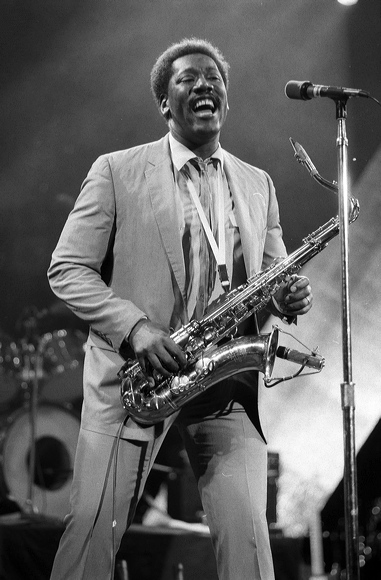 The media and the people who care about demographics would tell you that I belong to the tail end of the Baby Boomer generation, the folks who brought you Woodstock and Vietnam War protests, free love and costly debt accumulation. I would tell you that I belong to Bruce Springsteen and the E Street Band. It’s woefully inadequate as a tagline for an identity. But as a handy encapsulation of the forces that shaped my life, it will do. By the time I became old enough to care about cultural tags, the hippies had faded, the Vietnam War was winding down, Nixon had resigned, and Ford and Carter were presiding over a nationwide malaise. I was part of the generation that didn’t have a name. We weren’t Baby Boomers. We weren’t anything, really. We were just young, idealistic kids. In my case, I was trying to follow Jesus and trying to figure out how He would help me find a job once I graduated.
Bruce Springsteen played a concert in Athens, Ohio at that time, at a little auditorium on the campus of Ohio University. I was maybe 50 feet from the stage. And Bruce Springsteen did what he always did. He played for three and a half hours, and nobody, and I mean nobody, was complaining about the length of the show. I emerged a full-fledged, sweat-soaked, exhausted believer. Bruce got it. He understood in ways that the hippies totally missed. He understood the passions and the frustrations of my nameless generation, and he captured it all in mythic metaphors and poetry that could sing and sting. He also happened to play epic, glorious rock ‘n roll. “Every generation throws a hero up the pop charts,” Paul Simon would sing a decade later. Bruce Springsteen was mine. I just happened to share him with a few million other people.
The big black man who played saxophone at that concert died this weekend. His name was Clarence Clemons, although to millions of Springsteen fans he was simply The Big Man. Clarence Clemons wasn’t a great sax player. There are dozens of jazzmen who could school him. And he only really played two great solos in his life. The rest of the time he was content to churn out standard R&B riffs. Don’t let that fool you. He was the heart and soul of the E Street Band, and the E Street Band was the rock ‘n roll band of that nameless generation. Nobody else even came close.
Those two solos are both on the album Born to Run, the album that defined Bruce Springsteen. The first one is on the title track, a mad, soaring slab of soulful exuberance that perfectly matched the grit and passion of the lyrics. “We gotta get out while we’re young,” Bruce Springsteen sang, and that’s what Clarence Clemons played. It was a sax solo for the open road, for busting out and breaking shackles. The second and greater solo occurs at the end of the album, on a song called “Jungleland.” The open road has somehow inexplicably wandered into a thicket of blind alleys. The narrator who set out so confidently on the journey is back on the dead-end streets. Midway through the song Clarence Clemons plays a two-minute solo that captures the sound of America circa 1975, of the nameless generation of kids who thought they might have a defining moment, but didn’t, who busted out only to find a roadblock, a wall, an asphalt jungle without signs or markers. It is a solo that starts with a sustained wail and ends with a whimper. It may be the greatest rock ‘n roll elegy ever captured on recorded media.
That’s the guy who died this weekend. Maybe you had to be there, in Athens, Ohio, on that April night in the mid-1970s. Maybe you simply need to listen to the music. But that’s what we lost. And so it was a strange, rollercoaster day yesterday – Father’s Day, a day where I had wonderful conversations with my wife, and my kids, and numerous friends, and where I found myself emotionally raw, the tears welling up at the strangest times and the most inconvenient moments. The day was great. And so is the loss.
Subscribe to:
Posts (Atom)